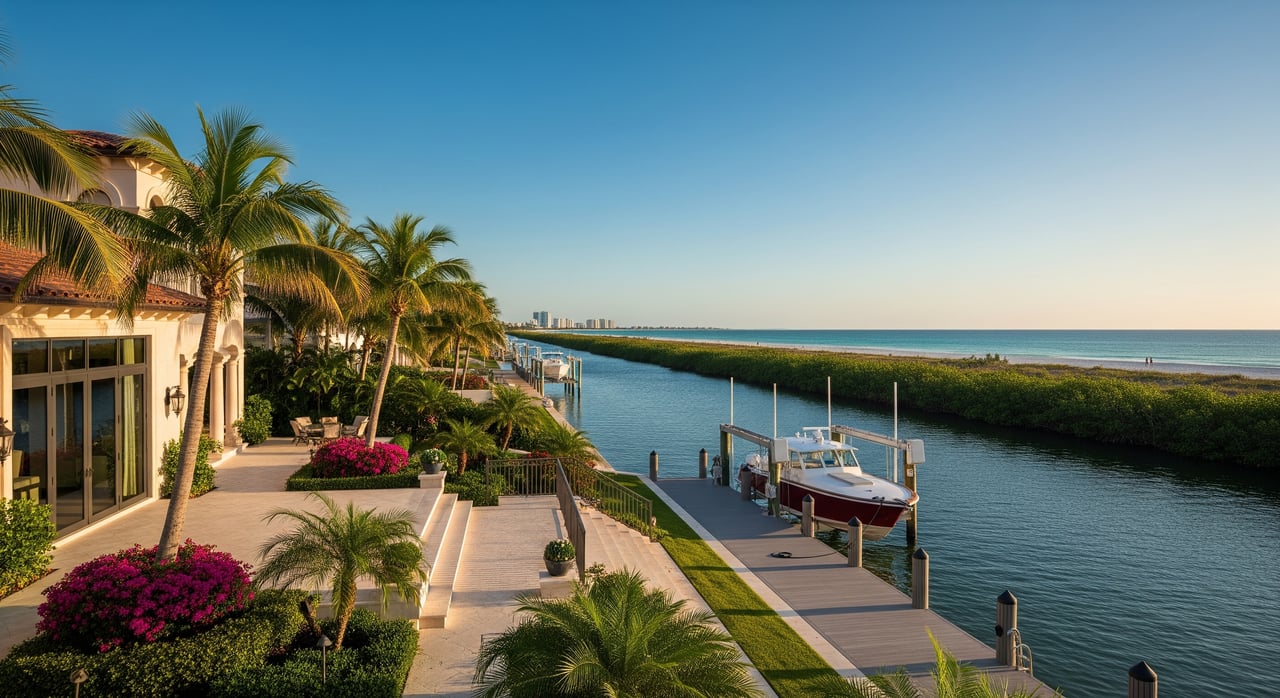
Beach in your backyard or a private dock to the open Gulf? If you are searching in Naples, the choice between gulf-front and gulf-access can shape your daily life, your budget, and your long-term return. Both offer stunning water lifestyles, but the details—permits, flood zones, navigability, and maintenance—are very different. In this guide, you will learn the real differences, how Naples rules affect each property type, and the key steps to verify before you buy or sell. Let’s dive in.
Quick definitions
Gulf-front explained
Gulf-front means the property physically borders the Gulf of Mexico shoreline with unobstructed Gulf views and direct beach proximity. Ownership typically extends to the mean high water line, while the wet sand below that line is generally held in public trust in Florida. Many gulf-front parcels fall inside Florida’s Coastal Construction Control Line, which introduces added permit steps for construction and dune protection.
Gulf-access explained
Gulf-access properties sit on canals, bays, or waterways that allow you to boat to the Gulf, often through channels and passes. The parcel does not touch the Gulf itself. What matters most is navigability: canal depth at low tide, any fixed bridges or locks along your route, seawall and dock condition, and the permits or HOA rules that govern lifts and boat sizes.
How Naples rules affect each
Coastal construction and the CCCL
Gulf-front parcels are more likely to be within the state’s Coastal Construction Control Line. Work there often needs state approval to protect the beach and dunes. Before planning new construction or major exterior changes, review the Florida Department of Environmental Protection’s guidance on the Coastal Construction Control Line to understand permit triggers and setbacks. You can explore the state overview on the Florida DEP’s Coastal Construction Control Line page.
- Learn more: see the Florida Department of Environmental Protection’s CCCL information at the Coastal Construction Control Line page.
Docks, seawalls, and mangroves
In Collier County, projects such as seawalls, docks, or vegetation changes (including any mangrove trimming) usually require county permits and may also need state or federal approvals. Some canals are near protected habitats where seagrass or mangroves limit dredging and new moorings. For federal permits related to in-water work, consult the U.S. Army Corps of Engineers, Jacksonville District.
- Federal permitting: review the U.S. Army Corps of Engineers Jacksonville District regulatory page.
Flood zones and storm risk
FEMA Flood Insurance Rate Maps classify much of Naples’ shoreline in coastal flood zones like AE or VE. Gulf-front homes face direct storm surge and erosion exposure, while canal properties can experience surge and backflow. Always verify a property’s flood zone at the FEMA Flood Map Service Center and request an elevation certificate before you finalize insurance.
- Check your flood zone: visit the FEMA Flood Map Service Center.
Sea level rise and erosion context
Long-term sea level rise and short-term storm events affect both beachfront and canal systems. Reviewing projections with tools like the NOAA Sea Level Rise Viewer can help you frame risk, mitigation, and potential future costs.
- Explore the NOAA Sea Level Rise Viewer for context.
Boating reality for gulf-access
Navigability checklist
Not every “gulf-access” listing is equal for boaters. Pay attention to:
- Depth at mean low water. Ask for recent soundings and whether dredging is scheduled or required.
- Bridge and fixed-structure clearance. A single low-clearance bridge can limit your boat options.
- No-wake and protected areas. Expect travel time and speed limits in manatee zones or sensitive seagrass areas.
- Dock permits and lift capacity. Confirm what is permitted today, not just what is installed.
You can find statewide boating rules and waterway guidance through the Florida Fish and Wildlife Conservation Commission’s boating resources.
Market and value in Naples
Gulf-front property usually commands a premium thanks to unobstructed Gulf views and immediate beach access. These homes are classic luxury inventory favored by second-home buyers who prioritize the beach and sunsets. Gulf-access homes typically trade at a lower price point for comparable size and finish, while delivering a strong boating lifestyle.
What drives value differences:
- View quality and privacy: open Gulf panoramas versus canal or inland waterways.
- Lot width and orientation: wider beachfront lots often fetch higher prices.
- Beach rights: documented private beach easements can increase value.
- Elevation and risk: higher elevation can reduce insurance costs and improve desirability.
- Dock and seawall: new or well-maintained waterfront improvements and adequate depth support modern boats and add value.
- Time to open Gulf: fewer bridges and quicker routes are prized by boaters.
To study local comparables, review Collier County Property Appraiser records for closed sales and property details, then compare waterfront types, lot sizes, and notable features.
- Research sales at the Collier County Property Appraiser site.
Insurance and maintenance costs
Insurance basics
If a property is in a FEMA Special Flood Hazard Area, most lenders require flood insurance. Coastal homes often carry higher windstorm premiums and hurricane deductibles. Elevation certificates, shutters, impact glass, and wind mitigation features can influence your rate. After major storms, insurers sometimes adjust availability and pricing by neighborhood, so it is wise to request current quotes early in your process.
Maintenance and recurring costs
- Seawalls and docks: Expect inspection, upkeep, and eventual replacement. Delayed maintenance can affect usability and value.
- Dredging and canal upkeep: Some areas require periodic dredging. Confirm who pays and whether special assessments are used.
- Salt and wind exposure: Plan for accelerated wear on HVAC systems, metal fixtures, paint, and exterior finishes.
- Dunes and beach work: Gulf-front owners may encounter dune protection rules and restoration programs that shape landscaping and future work.
Lifestyle tradeoffs
Gulf-front lifestyle
You step onto the sand, watch shorebirds, and catch unobstructed sunsets from your balcony. The flip side is more exposure to wind, waves, and potential storm surge. Privacy varies by location and beach access rules.
Gulf-access lifestyle
Your day revolves around the dock—fishing, island hopping, and sunset cruises. You may have more yard space and distance from beach activity. Travel time to the open Gulf depends on canals, bridges, and local speed limits.
Buyer due-diligence checklist
Use this quick list before you write an offer or during inspections:
- Confirm classification: gulf-front, gulf-access, or gulf-view using the legal description and survey.
- Flood zone and elevation: check FEMA FIRMs and obtain an elevation certificate; ask your lender about flood insurance requirements.
- Insurance quotes: get flood and windstorm quotes and ask about historical premium trends in the area.
- Docks and seawalls: verify age, condition, and repair history; confirm dock permits, lift capacity, and canal depth at mean low water. Note bridge clearances on your route.
- Permits and rules: review Collier County and Florida DEP permit history for seawalls, docks, and additions; confirm any HOA rules for docks, lifts, rentals, or exterior changes.
- Environmental constraints: identify proximity to protected areas where seagrass or mangrove rules may limit dredging or docking.
- Title and beach rights: verify the mean high water line, any beachfront easements, and riparian rights. Order a current survey to locate setbacks and coastal construction lines.
- Long-term risk: review local coastal planning documents and sea level rise resources to understand future risk and adaptation.
Tips for sellers to protect value
- Maintain and document seawall, dock, and lift care; keep permits handy.
- Order a current survey and elevation certificate; have title documents ready, including any beach easements.
- Disclose special assessments, HOA rules, and known erosion or flood risks.
- Highlight permitted upgrades and mitigation features such as impact windows, shutters, or a newer roof.
Which is right for you?
Choose gulf-front if you want instant beach time and iconic Gulf views and you are comfortable with higher exposure to wind, waves, and stricter coastal permits. Choose gulf-access if boating and on-water recreation are your top priorities and you want a wider set of options at varying price points. In both cases, your best decisions will come from confirming flood zones, permits, navigability, elevation, and the true cost of ownership.
When you are ready to compare specific Naples properties, get local guidance and a clean plan for due diligence. Start Your Luxury Home Journey with MJ Team.
FAQs
What is the difference between gulf-front and gulf-access in Naples?
- Gulf-front touches the Gulf shoreline with direct beach proximity and views, while gulf-access sits on canals or bays that let you boat to the Gulf but do not touch the Gulf itself.
Do I need special permits to build or renovate on a gulf-front lot?
- Likely yes. Many gulf-front parcels fall within Florida’s Coastal Construction Control Line, which adds state oversight to protect beaches and dunes.
How can I check a Naples home’s flood zone before buying?
- Look up the address at the FEMA Flood Map Service Center and request an elevation certificate to estimate flood insurance and risk.
Will my boat fit under bridges on a gulf-access canal?
- It depends. Verify bridge heights, canal depth at mean low water, and any no-wake or protected areas that affect route and vessel size.
Are insurance costs higher on the beach than on a canal?
- They can be. Rates vary with flood zone, elevation, and wind mitigation features. Always get current flood and windstorm quotes for the specific property.