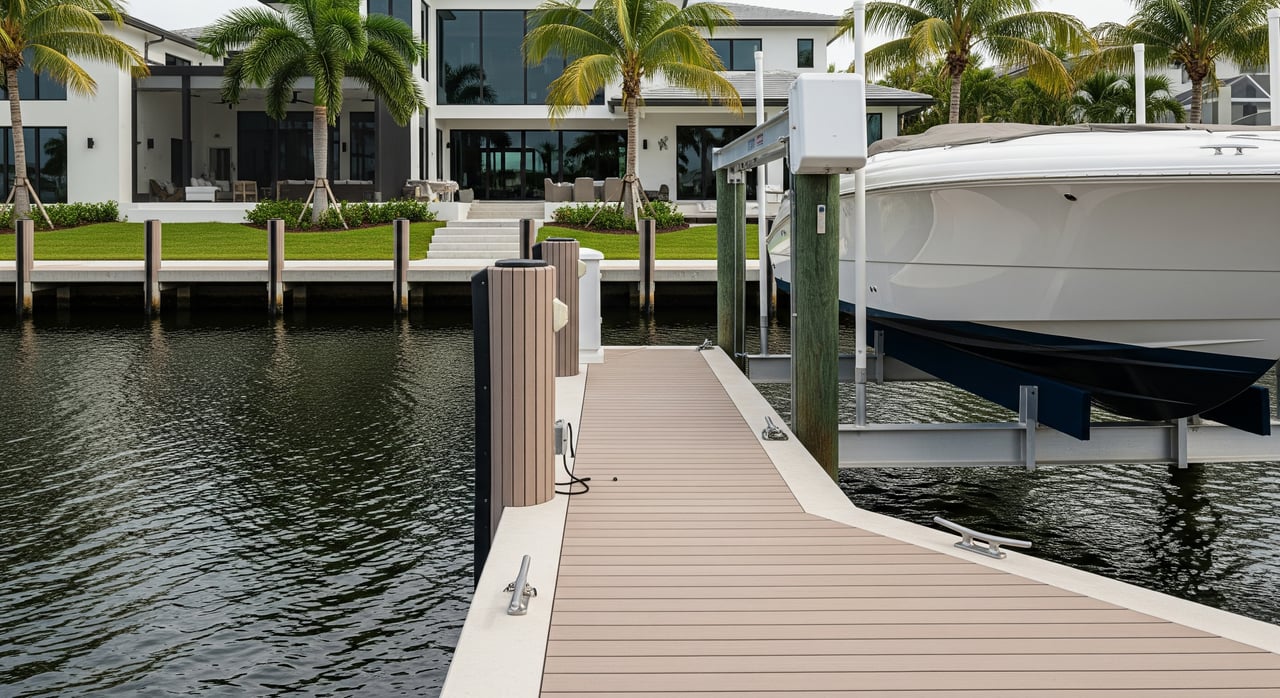
If you are dreaming of effortless boating from your backyard in Cape Coral, your dock and lift are as important as your kitchen. On our city’s extensive canal network, the right setup protects your boat, supports your lifestyle, and adds real value when you sell. The flip side is that permits, materials, and maintenance can feel confusing if you are new to saltwater living. In this guide, you will learn the essentials to plan, evaluate, or upgrade a dock and lift with confidence. Let’s dive in.
Why docks matter in Cape Coral
Water shapes daily life here. With an extensive canal system often described as hundreds of miles, your dock and lift influence how quickly you reach the Caloosahatchee River and the Gulf, how you use your backyard, and how buyers perceive your home.
A well-designed dock and lift can reduce boat wear, simplify outings, and help during storm prep. On the market side, buyers look closely at permitted status, condition, and ease of navigation. Getting these details right can protect both your fun and your equity.
Know the rules before you build
Dock and lift projects can touch local, state, and federal rules. Start with the City of Cape Coral Building Division for permits, setbacks, and placement relative to property lines. Lee County may have environmental requirements in certain areas. For work that affects state waters, seagrass, mangroves, or submerged lands, you may need approvals from the Florida Department of Environmental Protection and possibly the U.S. Army Corps of Engineers. Wildlife protections and guidance come from the Florida Fish and Wildlife Conservation Commission.
Flood zones and base flood elevation from FEMA can influence design and engineering. Electrical components must meet National Electrical Code and local code, including GFCI protection. Licensed contractors must meet Florida Department of Business and Professional Regulation requirements.
When you likely need permits
- New dock or lift construction on your property.
- Expansions or structural changes to an existing dock or lift.
- Significant repairs beyond like-for-like replacement.
- Electrical service for a lift, lighting, or shore power.
Setbacks and navigation basics
- Docks cannot obstruct boat traffic in canals and are limited in length and lateral placement.
- Design must respect property lines and local setbacks.
- Any dredging or work that disturbs the substrate can trigger deeper environmental review and mitigation.
Tip: Before any work, verify current requirements with the City of Cape Coral and Lee County. If your plans extend beyond your riparian lines or may affect submerged lands, consult state and federal agencies as well.
Dock and lift types
Common dock options
- Fixed pile-supported docks: Durable, stable, and common in our canals when depths are steady.
- Floating docks: Rise and fall with water levels. Helpful where adjustable elevation is useful.
- Combination docks: A fixed walkway with a floating section for flexible access.
Lift options for local waters
- Vertical boat lifts: Raise your boat fully out of the water to limit marine growth and corrosion.
- Cantilever or davit lifts: Good for smaller boats and personal watercraft where space or budget is tight.
- Single-post or specialty lifts: Niche solutions for small craft or tight lots.
Choosing what fits your canal
- Boat size and weight drive lift capacity.
- Canal width, turning radius, and neighboring docks influence placement.
- Water depth and exposure to wind or waves affect whether a fixed, floating, or combination layout is best.
Materials that stand up to saltwater
Saltwater is tough on metal and wood. Select marine-grade aluminum for frames, 316 stainless steel fasteners, and hot-dip galvanized or protected steel where used. Composite or high-quality hardwood decking can reduce rot and maintenance. UV-resistant coatings and lines extend life.
To combat galvanic corrosion, consider sacrificial anodes on metal parts in contact with water. Lift motors, cables, and rollers should be rated for marine use. Spending a bit more upfront on corrosion-resistant materials often pays off in fewer repairs and longer service life.
Design and safety basics
Hurricane resistance matters. Work with engineers or experienced builders to meet Florida Building Code wind and connection requirements, and design for expected flood elevations and storm surge. Adequate freeboard and secure connections help your dock ride out rough weather.
Electrical safety is non-negotiable. Use GFCI protection, proper grounding and bonding, and marine-grade wiring and enclosures. Keep outlets and junction boxes out of splash zones and schedule regular testing. Thoughtful lighting improves safety and should minimize disturbance to wildlife.
Permits, timelines, and costs
Approvals can take several weeks to several months depending on scope and environmental review. Like-for-like repairs often move faster than new or expanded docks that may affect navigation or habitat.
Costs vary by dock length, material, water depth, lift capacity, site access, engineering needs, and permitting complexity. Seasonal demand can also influence timing and pricing. Build quotes that include permits, engineering, and potential mitigation so you avoid surprises.
Hiring the right pro
- Verify active Florida licensing, insurance, and workers’ comp.
- Ask for recent Cape Coral references and photos of completed projects.
- Confirm experience with hurricane-resistant construction and saltwater materials.
- Clarify who manages permits and inspections and get timelines in writing.
Environmental protections to respect
Seagrass and mangroves are protected. Shading or damage can trigger mitigation requirements. Removing mangroves or disturbing the bottom may not be allowed without extensive review.
Dredging to deepen a berth almost always requires robust permitting and may be limited or denied in sensitive areas. Manatees and protected birds frequent local waters, so follow posted speed zones and minimize lighting impacts on wildlife. Best practices include minimizing footprint, using floating elements to reduce shading where feasible, and following state and federal guidance.
Insurance, inspection, and upkeep
Tell your carrier about your dock and lift. Coverage can be separate from the main homeowners policy and may have limits. Boat insurance is distinct and should address lift damage, storm impacts, theft, and liability around the dock.
Plan regular inspections for pilings, caps, fasteners, decking, and lift components. Test GFCI outlets and inspect wiring for corrosion. After storms, check for structural movement, loose connections, and debris.
Simple maintenance checklist
- Inspect pilings, hardware, and framing for corrosion or movement.
- Check decking fasteners and replace damaged boards.
- Service lift motors, cables, rollers, and bunks per manufacturer guidance.
- Test electrical systems and GFCI devices.
- Rinse metal components with fresh water after heavy use.
If you are buying or selling with a dock
Buyer due diligence
- Confirm permits for the dock and lift and request copies.
- Ask for as-built drawings or site plans if available.
- Order structural and electrical inspections and review maintenance records.
- Verify ownership of the seawall and dock, and any HOA rules.
- Get insurance availability and premium estimates, plus replacement or upgrade costs.
Seller preparation
- Disclose permits, known violations, and any open code or environmental issues.
- Share maintenance records, warranties for lift motors, and contractor details.
- Resolve code concerns before listing or disclose and price accordingly.
Documents to request or provide
- Local, county, and state permits and final inspections.
- Engineering or site plans and as-built drawings.
- Contractor invoices, receipts, and warranty paperwork.
- Insurance claim history related to dock or lift incidents.
Smart planning tips for homeowners
- Start early on permits and contractor selection to avoid seasonal backlogs.
- Consider future-proofing for higher freeboard and improved lift elevation.
- Choose corrosion-resistant materials and keep a maintenance log with receipts.
- Confirm canal navigability and travel times to the river and Gulf as part of your plan.
How the MJ Team can help
You deserve a waterfront expert who treats your goals with care and precision. Whether you are evaluating an existing dock and lift or planning new construction as part of a purchase, we guide you through due diligence, coordinate the right inspections, and keep your transaction organized from contract to close.
Our concierge approach pairs market knowledge with dependable follow-through. If you want a confident, streamlined path to Cape Coral waterfront living, connect with the MJ Team for thoughtful guidance and a smooth experience.
FAQs
Do I need a permit to build or replace a dock or lift in Cape Coral?
- Most new docks, lifts, expansions, and significant repairs require a local building permit, and some projects also need state or federal approvals depending on location and environmental impacts.
How can I confirm an existing dock or lift is permitted and up to code?
- Ask the owner for permit records and final inspections, and contact the City of Cape Coral to verify; consider a professional structural and electrical inspection during due diligence.
What dock or lift type works best for Cape Coral canals?
- Many homes use fixed pile-supported docks with vertical lifts, while floating or combination layouts fit sites with variable water levels or specific access needs.
How long do permitting and construction usually take?
- Timelines can range from several weeks to several months depending on scope, environmental review, and seasonal backlogs, with like-for-like repairs typically moving faster than new builds or expansions.
How do docks and lifts affect homeowners and boat insurance?
- Dock and lift coverage may be separate or limited on homeowners policies, and boat insurance is distinct, so notify your carrier and review options for storm, theft, and liability coverage.
What should I look for when hiring a marine contractor?
- Verify Florida licensing and insurance, get local references, confirm hurricane and saltwater experience, and make sure permit handling, scope, and timeline are clear in writing.