"We need to develop the best version of the Wonder Gardens," Neil Anderson told Gulfshore Life this spring. Anderson led the Bonita Springs institution through its recovery from Hurricane Ian, and in 2023 he soft-launched a master plan for it. Before he came to Old 41, he spent 30 years building Wisconsin's NEW Zoo & Adventure Park, which also began as a small roadside stop and is now accredited by the Association of Zoos and Aquariums.
Gulfshore Life reports that the long-term goal is to become a nationally accredited, conservation-focused zoo by the Gardens' 100th anniversary. The Gardens turned 90 this year. If you bring family through the gate this Thanksgiving weekend, you will see the first finished pieces of that ten-year plan and the spots where the next ones are going up.
Ninety years on three acres along the Tamiami Trail
The Wonder Gardens is older than most of what surrounds it. Brothers Bill and Lester Piper opened it in 1936 as The Reptile Gardens, on the Tamiami Trail. The road had reached Bonita Springs in 1928. As the collection grew past reptiles, the Pipers renamed it the Everglades Wonder Gardens. Through the late 1930s and the 1940s they added Florida panthers, black bears, otters, deer, sandhill cranes and flamingos, along with tropical plants and rare trees.
Gulfshore Life described those early decades this way: visitors peered into low-walled alligator pits and small cages set under the banyans. That model ended in April 2013, when the Piper family closed the Gardens. Local photographer and conservationist John Brady reopened the property as a tenant. With Ellie Krier and a founding board, he formed the nonprofit Bonita Wonder Gardens. In July 2015, a loan from the City of Bonita Springs let the nonprofit buy the three-acre property and its assets from the Pipers. WGCU reported that the loan kept the land from possible commercial development. The city later bought the land itself, and the nonprofit still runs the Gardens.
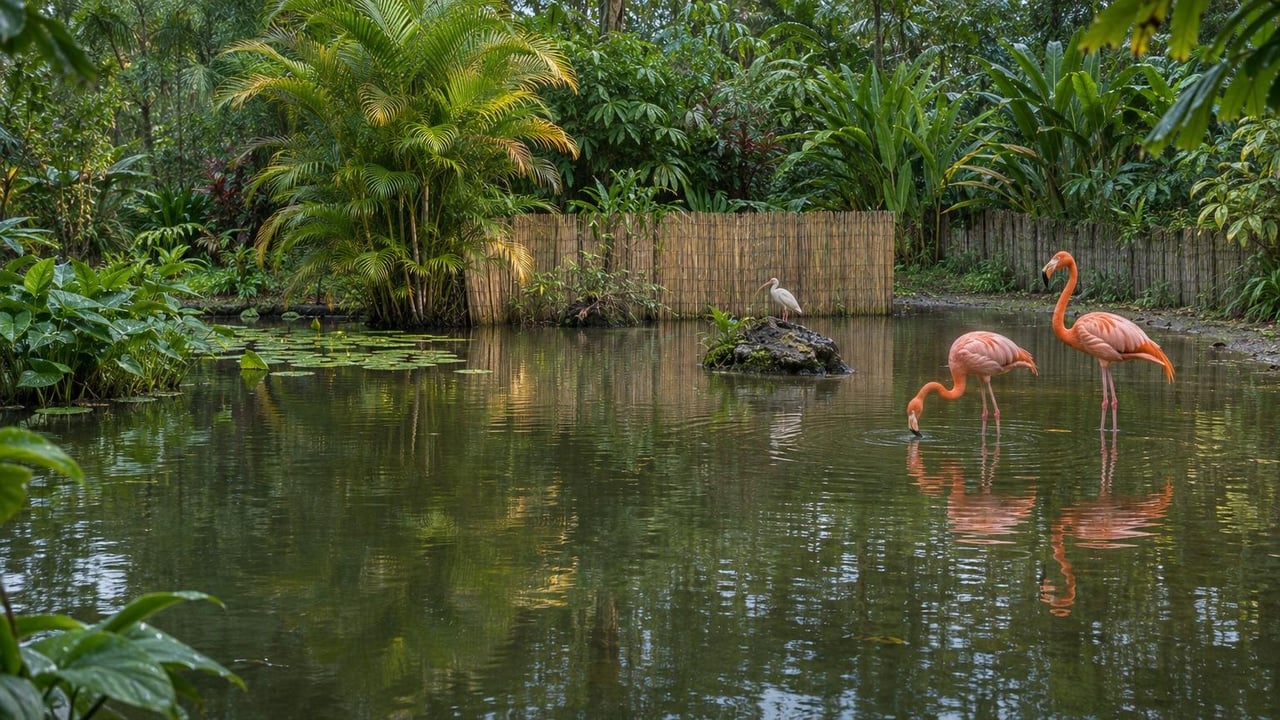
That ownership shapes what the place is in 2026. The Wonder Gardens describes itself as a botanical garden and a refuge for rescued wildlife that can't be released. The animals you meet there arrived for a reason, and the newest habitats are built around that.
The otters and alligators came out of the Ian rebuild
In August 2025, the Gardens opened two new habitats. The Robert & Deborah Blain Otter Grotto is home to two rescued female river otters, Ivy and Mae. It has a pool, a waterfall and glass viewing panels, so you can watch the otters swim at eye level. The Dorothy Guigon Vivarium holds two juvenile alligators, Jessie and James.
Kaitlyn Henry, the Gardens' director of living collections, told WGCU that the two projects took four years and came after the rebuilding that followed Hurricane Ian. A $300,000 gift from Robert and Deborah Blain made the otter grotto possible. Four years from start to opening is a useful measure to keep in mind when you read the rest of the plan.
For anyone who remembers the low-walled alligator pits of the Pipers' era, the alligators are where the plan goes next. The master plan calls for a dedicated alligator viewing area, and Gulfshore Life describes a proposed glass-enclosed habitat for alligators and snapping turtles.
The barn by the river is the next big project
The next large change sits on the Imperial River side of the property. Last November, the Gardens announced $1.3 million in state funding for a new event center, as the News-Press reported. The climate-controlled building will overlook the river and replace the barn Hurricane Ian damaged. It is planned for year-round classes, summer camps, education programs and private events such as weddings. Gulfshore Life describes walls of hurricane-proof windows facing the river and puts the opening at fall 2027.
That means the 2026-27 season is the last one before the riverside building opens. If your family has ever pictured a wedding, a birthday or a nonprofit dinner under the Gardens' trees, fall 2027 is the date to plan around.
The center is one item in a longer list. The master plan includes an entry-zone museum, an elevated canopy walk, a better marsh-filtration exhibit, an event building with an aviary, an amphitheater, a discovery zone, the alligator viewing area and upgraded aviaries. One piece most visitors won't see is a two-level Animal Care Center of about 4,500 square feet. It would hold animal housing, surgery and food-preparation areas, along with staff space and an area where visitors can watch.
The canopy walk would change a visit the most. Gulfshore Life describes an elevated boardwalk winding through the treetops, with lookout points over the grounds. "There are a lot of stories up there," Anderson told the magazine.
A zookeeper from Fargo now holds the plan
Anderson has retired. Sally Mulvena became president and CEO on July 1, 2026. In August, WGCU's Gulf Coast Life introduced her. She spent the previous decade as president and CEO of the Red River Zoo in Fargo, North Dakota, and has worked her whole career as a zookeeper and zoo manager.
Back to back, the Gardens has been led by a man who took a roadside attraction to accreditation and then by a woman who has spent her whole career running zoos. The rest of the current leadership team includes Jessica White, Kaitlyn Henry and Kam Stoneburner. Mulvena takes over in the middle of the plan. The otters and alligators are in place, the event center has its state money, and the canopy walk and care center are still on the drawing board.
Planning a visit this Thanksgiving week
Posted hours are 9 a.m. to 4 p.m. daily, with last admission at 3 p.m. Admission rates took effect June 15, 2026: adults ages 13 to 64 pay $19, seniors 65 and up pay $17, children ages 3 to 12 pay $14, and children under 3 get in free. Active and retired military, first responders and teachers get $2 off with proof of service. You don't need a reservation, and you can buy tickets online. Since this is a holiday week, look at wondergardens.org before you drive over on Thanksgiving Day or Black Friday.
Two programs are worth timing a visit around:
- Habitat Chat: every Thursday at 1 p.m., free with paid admission. The species and topic change each month.
- Wild Wonders tortoise encounter: about 30 minutes, listed at 11:30 a.m. It costs $20 for nonmembers or $15 for members on top of admission, and you need to book ahead.
Publish day is a Thursday, so a midday visit puts the 1 p.m. Habitat Chat inside the 9-to-3 entry window.
The Gardens has its own parking lot on site. Downtown parking has changed since last season. The city's Bamboo Lot closed to the public on December 1, 2025, and the city now directs downtown visitors to on-street spaces and the Felts Avenue lot. If you plan to walk Old 41 afterward, that matters. Gulfshore Life lists Downtown Coffee and Wine Company, Maria's Restaurant and The Bohemian among the downtown spots, and our guide to how the Old 41 corridor grew one restaurant at a time covers the rest of the block. For Riverside Park, see our piece on Riverside Park's winter calendar.
The Gardens has one evening event on its December calendar. Wine & Wonder is on Friday, December 11, from 6 to 8:30 p.m. It includes after-hours access to the grounds, lights, jazz, food, drinks and a silent auction. General admission is $75 for nonmembers and $70 for members. It's also a chance to walk the grounds after dark, a year before the riverside barn is replaced.
The Wonder Gardens has been on Old 41 since 1936. If you're weighing a home within reach of downtown Bonita and want to know how the Gardens, Riverside Park and the Old 41 corridor fit together day to day, Michael Knoerlein, PA and the MJ Team are glad to walk you through it. Start Your Luxury Home Journey with MJ Team.