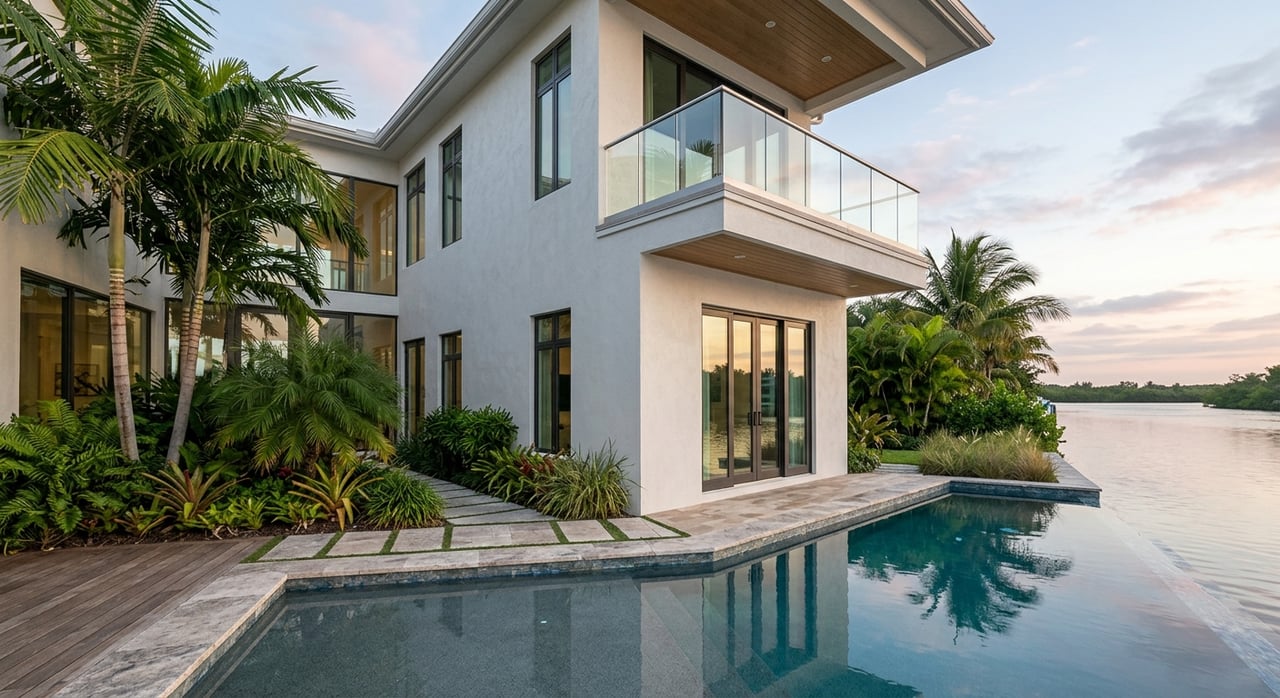
If you’re deciding between a waterfront lot and a finished home on Marco Island, you’re really choosing between two very different ownership paths. One gives you more control over the final product, while the other can get you enjoying the waterfront lifestyle much sooner. On Marco Island, that choice matters even more because floodplain review, shoreline rules, permits, and carrying costs are part of normal due diligence. This guide will help you compare both options so you can make a more confident decision. Let’s dive in.
Why this choice matters on Marco Island
On Marco Island, the decision is not just about whether you want to build or buy. It is also about how much time, coordination, and risk you want to take on. The city notes that every property on the island is in, on, or near a Special Flood Hazard Area, and structures are subject to floodplain review during the building permit process.
That local reality changes the conversation. A vacant lot may look like a blank canvas, but the path from land purchase to move-in includes more steps than many buyers expect. A finished waterfront home or condo may offer a faster route, but you are also accepting existing design choices, condition, and in some cases association governance.
Waterfront lot: more freedom, more process
If your dream is to create a custom waterfront property, a vacant lot can be appealing. You have more influence over layout, finishes, and how the home fits your lifestyle. That can be especially attractive if you want a new luxury home built around boating, views, or modern design preferences.
On Marco Island, though, building on a waterfront lot is rarely a simple land purchase followed by construction. The city’s process includes site planning, drainage review, floodplain compliance, permitting, inspections, and a Certificate of Occupancy before the home can be used.
What the lot route typically involves
Buying a lot means preparing for a sequence of steps before you can move in:
- Survey work
- Home design and site planning
- Lot drainage planning
- Floodplain review
- Building permits
- Required inspections
- Certificate of Occupancy
The city states that a new dwelling cannot be occupied until the Certificate of Occupancy is issued, all required inspections are complete, and fees are paid. That timeline can be manageable with the right team, but it is still longer than buying an existing residence.
Site constraints can shape your plans
A waterfront lot gives you flexibility, but not unlimited flexibility. Marco Island’s site-permit instructions require a site plan and a lot drainage plan, and the city also notes that significant parts of the island may be subject to deed restrictions.
That means your vision for the property has to work within local rules and site conditions. Before you assume a lot will support a certain footprint, dock setup, driveway plan, or landscaping concept, it is important to understand what the property can actually accommodate.
Shoreline work can add another layer
On waterfront property, shoreline improvements often become part of the conversation early. If a lot needs seawall construction, repair, or related dock work, the city requires a marine staging permit. Seawall plans must also be prepared and sealed by a Florida-registered professional engineer.
This is one reason vacant waterfront lots can become more complex than buyers expect. The lot price is only one piece of the total investment. Engineering, permitting, shoreline work, and timing all affect the final picture.
Carrying costs matter while you build
A lot purchase also comes with carrying costs during the planning and building period. Collier County appraises property for tax purposes, and the city requires permit-related fees and county impact fees before permit issuance.
Flood insurance may also be part of your ownership costs depending on the property and financing. FEMA states that most mortgage lenders require flood insurance in high-risk flood areas. On Marco Island, that is a practical factor buyers should evaluate early, not late.
Landscaping and utility issues can affect timing
Waterfront land often comes with natural features that need careful review. The city states that removing native or exotic vegetation can require a permit, while mangroves and dune vegetation are protected. Mangrove trimming is also regulated by the state.
Utility questions can matter too. Marco Island says existing structures must connect to the sanitary sewer when the main becomes available, and the city’s sewer assessment information notes that assessments may be paid over time. Those details can influence your budget and timeline depending on the property.
Permit delays can be costly
Timing risk is one of the biggest differences between a lot and a finished home. The city says permit applications can be deemed abandoned after 180 days. Permits can also expire if work does not begin and inspections are not requested within 180 days.
The city also notes that starting work without a permit can trigger a penalty equal to 300 percent of the usual permit fee. For buyers building from the ground up, staying organized is not optional. It is part of protecting your investment.
Finished waterfront home: faster use, less flexibility
If your priority is to start enjoying Marco Island sooner, an existing waterfront home often offers the most direct path. The home, lot improvements, and basic site work are already in place. That can make the ownership timeline much easier to understand.
Instead of managing the full build process, you are reviewing the existing property as it stands today. That usually shifts your focus toward condition, maintenance, elevation, and whether the property fits your needs without major changes.
What you gain with an existing home
For many buyers, the biggest advantage is speed. You are not waiting on design, permit approvals, inspections across a full build, and a final Certificate of Occupancy for a brand-new dwelling.
That can be especially valuable if you are purchasing a second home, relocating on a timeline, or simply want less project management. In a market like Marco Island, convenience has real value.
What you inherit with an existing home
The tradeoff is that many important choices have already been made. You inherit the current layout, site orientation, elevation, seawall condition, and overall maintenance profile.
That does not make an existing home a weaker option. It just means you need to evaluate it differently. Instead of asking, “What can I build?” you are asking, “How well does this property’s current condition align with my plans?”
Renovation is not always simple
Some buyers assume they can purchase an older waterfront home and remodel it to fit their vision. That may still be possible, but Marco Island’s local rules matter. Additions and alterations require floodplain review.
The city also applies FEMA substantial-improvement and substantial-damage rules if work or damage in a Special Flood Hazard Area exceeds 50 percent of the structure’s market value. In practical terms, a major renovation can become more involved than expected.
Right-of-way approvals may still apply
Even when you buy an existing home, outside work can trigger more approvals. The city states that a separate right-of-way permit is required for construction, planting, or disturbance in the public right of way.
So while an existing home can reduce the upfront complexity compared with a vacant lot, it does not remove due diligence. It simply changes where your attention should go.
Waterfront condo: the most turnkey option
For some buyers, a condo may be the easiest way to enjoy waterfront living on Marco Island. If you want a property that is typically more turnkey and may involve less exterior maintenance, a condo can be a strong fit.
But convenience comes with another set of considerations. In a condo purchase, your review is not just about the unit. It is also about the association, its records, and the building’s long-term financial picture.
Association records are a key part of due diligence
Florida law requires condo associations to maintain official records that include budgets, financial statements, permits, and inspection reports. Those records must be available to unit owners and prospective purchasers.
That gives you access to important information before you buy. It also means your review should go beyond the monthly fee and include the association’s broader financial and maintenance position.
Reserve studies and assessments can affect ownership costs
For many condo buildings that are three habitable stories or higher, Florida requires a structural integrity reserve study at least every 10 years. The study covers major components such as the roof, structure, fire protection, plumbing, and electrical systems.
Associations may fund required work through reserves, special assessments, loans, or lines of credit. For buyers, that means the true cost of ownership is not just the purchase price. It also includes the association’s funding approach and any planned future expenses.
How to compare your real options
When you are choosing between a waterfront lot, an existing home, and a condo on Marco Island, it helps to compare them through a practical lens.
| Option | Main advantage | Main tradeoff |
|---|---|---|
| Waterfront lot | Maximum design freedom | More approvals, longer timeline, more carrying costs |
| Existing waterfront home | Faster path to use | Existing condition, layout, and site choices are fixed |
| Waterfront condo | Most turnkey ownership | Association fees, rules, and possible assessments |
The right answer depends on how you prioritize customization, timeline, and complexity. A buyer who wants a fully tailored waterfront residence may gladly take on the lot route. A buyer who values speed and simplicity may prefer an existing home or condo.
Questions to ask before you decide
Before you commit to any Marco Island waterfront property, it helps to ask a few focused questions:
- Is the lot buildable as-is, or could it need variances, shoreline work, or added site engineering?
- Is there an existing seawall, and if not, what approvals will that require?
- What flood zone applies to the property?
- Will flood insurance likely be part of the ownership picture?
- Are there deed restrictions, condo rules, or right-of-way issues that could affect exterior changes?
- For a condo, what do the current budget, reserves, inspection reports, and planned assessments show?
These questions can save you time, money, and frustration. On Marco Island, they are not minor details. They are part of buying wisely.
The Marco Island bottom line
A waterfront lot on Marco Island can offer the most freedom, but it usually comes with more time, approvals, and carrying costs. A finished waterfront home or condo can offer convenience and faster enjoyment, but with less control and more inherited conditions or association considerations.
Because local floodplain review, shoreline rules, permit timing, and condo reserve requirements all play a major role here, the best choice is rarely one-size-fits-all. It depends on your goals, timeline, and comfort with process. If you want experienced guidance comparing Marco Island waterfront options, MJ Team can help you evaluate the tradeoffs and move forward with confidence.
FAQs
What is the main difference between buying a waterfront lot and a finished home on Marco Island?
- A waterfront lot usually gives you more design control, while a finished home usually offers a faster path to occupancy with fewer upfront steps.
What permits matter for a waterfront lot on Marco Island?
- Depending on the property and project, buyers may need site planning, drainage review, floodplain review, building permits, inspections, and possibly marine staging permits for seawall or dock-related work.
What flood issues should buyers review for Marco Island waterfront property?
- Buyers should review the property’s flood zone, floodplain requirements, possible elevation documentation needs, and whether flood insurance may be required as part of financing or ownership.
What should buyers review before purchasing a Marco Island waterfront condo?
- Buyers should review association budgets, financial statements, reserve funding, inspection reports, permits, and any planned special assessments or major projects.
Is remodeling an existing waterfront home on Marco Island always easier than building new?
- Not always. Additions and alterations still require floodplain review, and major work may trigger substantial-improvement rules depending on the scope and the structure’s market value.
Who should help you evaluate a Marco Island waterfront lot?
- Because local review can involve flood compliance, surveying, engineering, building, and insurance questions, buyers should involve qualified professionals early in the process.